
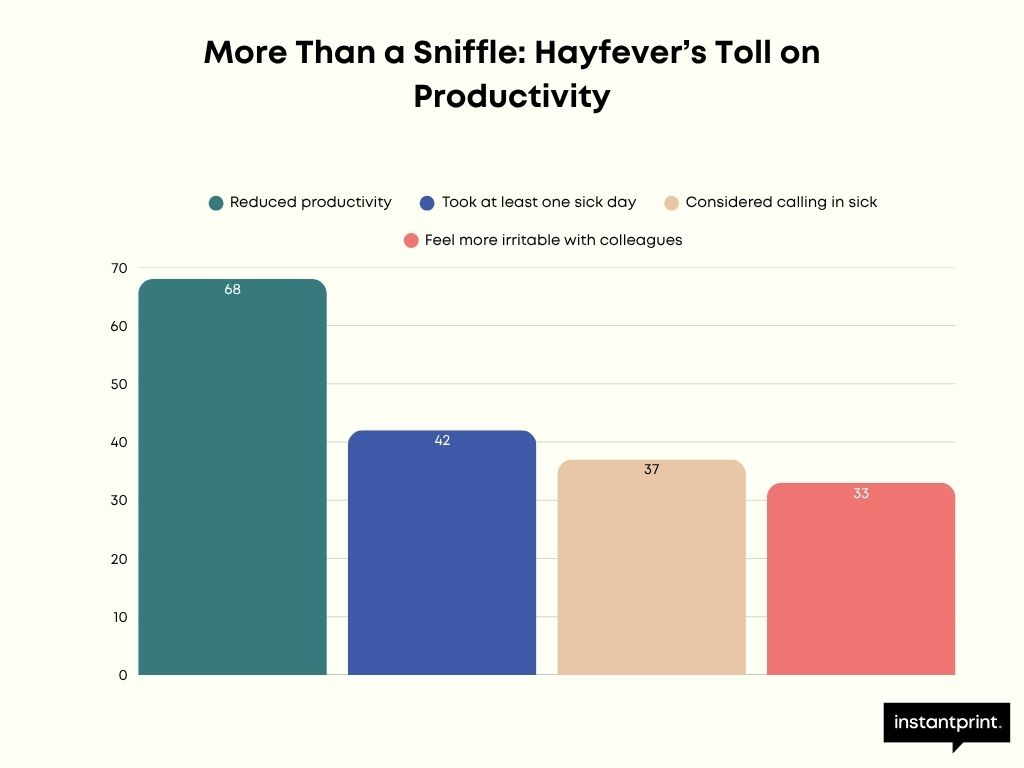
68% of UK office workers say hayfever reduces their productivity during peak season, yet it is still widely brushed off as a minor inconvenience. New research from instantprint, surveying 1,000 UK office workers, reveals a very different reality, one where pollen is not just a personal nuisance, but a growing workplace problem affecting performance, morale and team dynamics across the country.
When Sneezing Becomes a Business Problem
For many, hayfever conjures up images of the occasional sneeze or watery eyes. But in reality, symptoms are far more disruptive. According to the research, more than two-thirds (68%) of workers experience a noticeable dip in productivity during high pollen periods, with brain fog, fatigue and headaches making even simple tasks harder to complete.
The knock-on effect is significant. 42% of employees admit to taking at least one sick day due to hayfever, while a further 37% say they have considered calling in sick but pushed through regardless. This points to a hidden productivity drain, where presenteeism, employees working while unwell, quietly chips away at output.
And it does not stop at individual performance. One in three (33%) workers report feeling more irritable with colleagues when experiencing symptoms, highlighting how hayfever can strain workplace relationships and disrupt collaboration. In environments where teamwork is key, even small shifts in mood and communication can have wider consequences.
More Than Just a Bad Day: The Science Behind the Symptoms
Hayfever is not simply an annoyance, it is a recognised allergic condition that can have a measurable impact on cognitive function and wellbeing. Research has shown that allergic reactions can impair sleep quality and concentration, contributing to daytime fatigue and reduced mental clarity. This aligns with instantprint’s findings, where 54% of workers say they struggle to concentrate during high pollen days.
Environmental factors also play a major role. Over half (54%) of respondents say poor office ventilation makes their symptoms worse, while 46% report that their commute exposes them to high pollen levels before the workday even begins.
Despite this, only 21% feel their workplace actively supports them during allergy season, suggesting a gap between employee needs and employer action.

“It’s Not Just a Sniffle”: Why Employers Need to Pay Attention
Sean Kachmarski, Health and Wellbeing Trainer at instantprint, explains why hayfever deserves more serious consideration in the workplace:
“Hayfever is often dismissed as a minor seasonal inconvenience, but our research shows it can have a very real impact on how people feel and perform at work. When employees are uncomfortable, tired and struggling to concentrate, it naturally affects both productivity and morale.”
To help businesses better support their teams, Sean recommends a series of practical, low-effort adjustments:
- Improve ventilation and maintain clean air systems to reduce indoor allergens
- Offer flexible working options during peak pollen days
- Encourage regular breaks to minimise eye strain and fatigue
- Share guidance on symptom management, including hydration and medication
- Make small environmental changes, such as keeping windows closed when pollen counts are high
These steps may seem simple, but collectively they can make a meaningful difference to employee comfort and performance.
From Seasonal Struggle to Strategic Priority
Hayfever may be seasonal, but its impact on the workplace is anything but temporary. With climate change contributing to longer and more intense pollen seasons, the number of employees affected, and the severity of their symptoms, is likely to increase.
For businesses, this presents a clear opportunity. Supporting employees through allergy season is not just about wellbeing, it is about protecting productivity, maintaining positive team dynamics and creating a workplace where people can perform at their best, whatever the season.
As organisations continue to invest in health and wellbeing initiatives, recognising and addressing everyday challenges like hayfever could be the difference between a workforce that merely copes and one that truly thrives
.jpg)