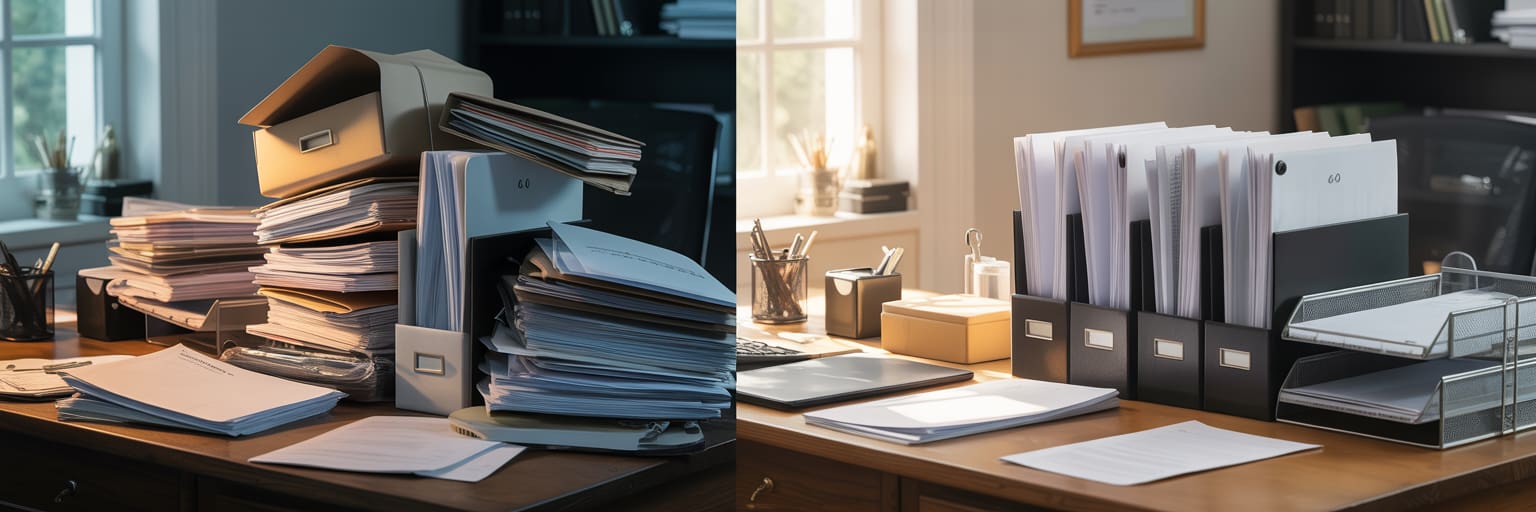
Whether you're running a small business or working from home, keeping your documents organised can make a huge difference to your productivity. From invoices and contracts to everyday paperwork, having a clear storage system helps you save time, reduce stress and keep everything running smoothly.
Good document storage is simply a way to organise, store and access your paperwork quickly and efficiently, whether physically, digitally or both.
If paperwork tends to pile up on your desk, don’t worry — you’re not alone. With the right setup and a few simple habits, it’s easy to create a system that works for you.
Table of Contents
- Why Document Storage Matters
- Physical vs Digital Storage
- Smart Document Storage Solutions
- Top Organisation Tips
- Storage Ideas for Small Spaces
- How to Maintain Your System
- Document Storage FAQs
- Final Thoughts
Why Document Storage Matters
A cluttered workspace doesn’t just look messy — it can slow you down. Poor organisation makes it harder to find important documents, disrupts your workflow and can increase stress.
For small business owners and home workers, having a reliable system in place helps you stay efficient and in control of your day-to-day tasks.
Physical vs Digital Storage
Most people benefit from a mix of both physical and digital storage. Choosing the right balance helps you stay organised while keeping important information accessible and secure.
Physical Storage
Physical storage is still essential for certain types of documents, particularly those that need to be signed, presented or stored securely.
- Contracts and legal documents
- Invoices and receipts for accounting
- Client-facing materials and printed reports
- Documents you need quick access to during meetings
Using tools like presentation folders and labelled filing systems helps keep these documents organised and easy to retrieve when needed.
Digital Storage
Digital storage helps reduce clutter and makes it easier to manage large volumes of information. It also allows you to access documents from anywhere.
- Backups of important files
- Scanned copies of paperwork
- Documents that need to be shared or accessed remotely
Cloud storage platforms and organised folder structures can make digital files just as easy to navigate as physical ones.
Creating a Hybrid System
For most home offices and small businesses, a hybrid approach works best. Keep essential documents physically organised, while storing backups digitally for added security and convenience.
This approach gives you the reliability of physical storage alongside the flexibility of digital access.
Smart Document Storage Solutions
The right storage solutions make organising your documents much easier. The goal is to keep everything protected, accessible and easy to sort.
Presentation Folders for Everyday Use
Presentation folders are a simple way to keep related documents together. They’re ideal for organising client work, project files or important paperwork, while keeping everything neat and professional.
They’re especially useful if you regularly carry documents between meetings or need to present information clearly.
Labelled Storage with Stickers
Labels are one of the easiest ways to improve organisation. Using stickers to label folders, drawers or archive boxes means you can instantly see what’s inside without having to search through everything.
This is particularly helpful when managing multiple clients, projects or document types.
Filing Systems
A structured filing system helps you stay consistent. You can organise documents by:
- Client or project
- Date (monthly or yearly)
- Document type (invoices, contracts, admin)
Whichever system you choose, consistency is key. Using the same structure across all documents makes it much easier to find what you need later.
Storage Boxes & Archive Systems
For documents you don’t need every day, archive storage is a great option. Labelled storage boxes allow you to safely store older paperwork while keeping your main workspace clear.
This helps reduce clutter without losing access to important information when you need it.
Top Organisation Tips
Declutter First
Remove anything you no longer need before setting up your system.
Create Categories
Group documents into clear sections such as finance, admin or client work.
Label Everything
Clear labels make your system easy to follow and maintain.
Keep Frequently Used Items Accessible
Store everyday documents within easy reach.
Keep Your Desk Clear
A clear desk helps you stay focused and organised.
Storage Ideas for Small Spaces
Use Vertical Space
Wall-mounted storage helps free up desk space.
Choose Multi-Functional Furniture
Desks with built-in storage keep everything in one place.
Use Compact Storage
Stackable boxes and slim organisers maximise small areas.
Keep It Minimal
Only keep what you need to reduce clutter.
How to Maintain Your Storage System
Setting up a document storage system is only the first step. Keeping it organised over time is what makes it truly effective.
Without regular maintenance, even the best system can quickly become cluttered again.
Sort Documents Immediately
Get into the habit of filing documents as soon as they come in. This prevents paperwork from building up and becoming overwhelming.
Schedule Regular Reviews
Set aside time each month to go through your documents. Remove anything you no longer need and reorganise where necessary.
Archive Old Documents
Move older paperwork into labelled archive storage to keep your main workspace clear while still keeping records accessible.
Stick to Your System
Consistency is key. Once you’ve created a structure that works, stick to it so you don’t end up with multiple systems that cause confusion.
Keep It Simple
The simpler your system, the easier it is to maintain. Avoid overcomplicating your setup with too many categories or storage methods.
Small, consistent habits will help you stay organised long-term without needing to constantly reset your system.
Document Storage FAQs
What is the best way to organise documents?
Create clear categories, use labelled folders and keep frequently used documents accessible.
How do I store important paperwork safely?
Use labelled folders and keep documents in a secure place, with digital backups where possible.
How can I reduce paper clutter?
Declutter regularly and digitise documents where possible.
What documents should I keep physically?
Important legal, financial and contract documents should be kept physically.
How do I organise documents for a small business?
Group documents by category and use folders and labels to keep everything structured.
How often should I organise paperwork?
Monthly reviews help prevent clutter from building up.
Bringing It All Together
Getting your documents organised doesn’t require a complete overhaul — just a simple system that works for you and a few habits you can stick to.
Whether it’s using presentation folders to keep projects together, adding clear labels with stickers or setting aside time each month to stay on top of your paperwork, small changes can make a noticeable difference.
An organised workspace isn’t just about keeping things tidy. It helps you work more efficiently, reduces everyday stress and makes it easier to stay focused on what matters most — whether that’s running your business or getting through your to-do list.
Start small, keep it simple and build a system you can maintain. Over time, those small improvements will add up to a workspace that feels more in control, more productive and much easier to manage.
.jpg)