In a world of digital connections, the humble business card still holds serious power. It’s often the first physical touchpoint someone has with your brand, and when it’s done right, it can leave a lasting impression long after the conversation ends.
But exchanging business cards isn’t just about handing one over. There’s an art to it. From timing and presentation to design and print quality, every detail plays a role in how you’re remembered.
Here’s how to master the art of exchanging business cards and turn a simple interaction into a meaningful connection.
Table of Contents
- Why Business Cards Still Matter
- When to Exchange Business Cards
- How to Present Your Business Card
- Receiving a Business Card the Right Way
- What Makes a Business Card Memorable
- The Role of Print in First Impressions
- Common Mistakes to Avoid
- Blending Print with Digital
- In Conclusion
Why Business Cards Still Matter
Despite the rise of LinkedIn and QR codes, business cards remain one of the most effective networking tools.
They’re immediate, personal and tangible. Unlike a digital connection that can be forgotten in a crowded inbox, a well designed business card sticks around, in wallets, on desks or pinned to noticeboards.
More importantly, they say something about your brand. A high quality card communicates professionalism, attention to detail and credibility before you’ve even said a word.
When to Exchange Business Cards
Timing is everything. Handing over your card too early can feel forced, while waiting too long might mean missing the opportunity altogether.
The best moment is usually towards the end of a conversation, once you’ve established a connection. That way, your card becomes a natural next step rather than an interruption.
That said, if someone asks for your details, that’s your cue. Be ready.
How to Present Your Business Card
The way you present your card matters just as much as the card itself.
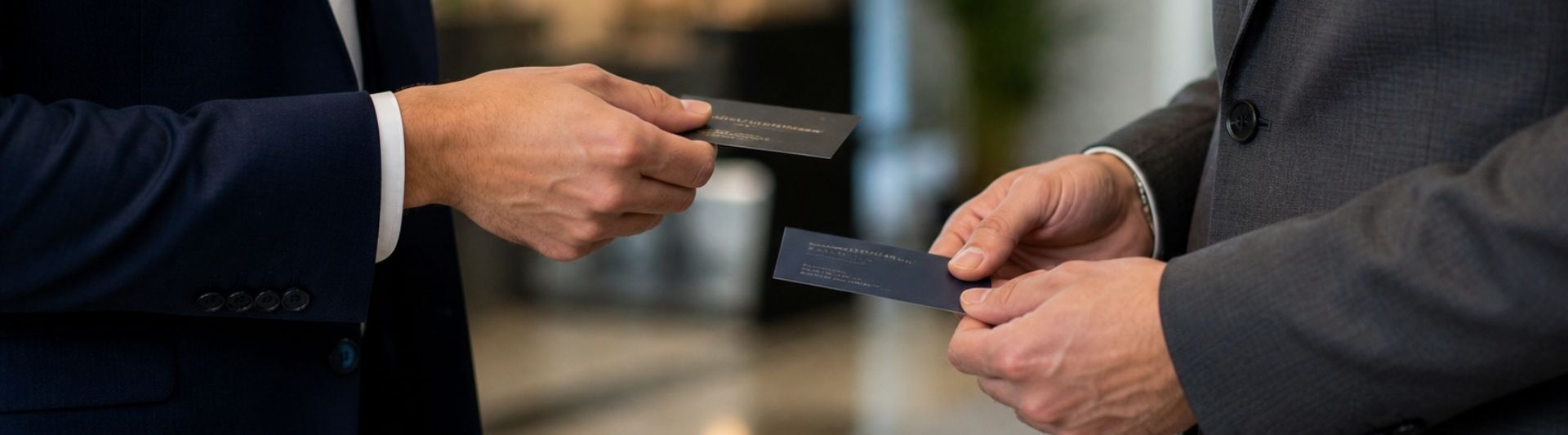
Always hand it over facing the recipient so they can read it immediately. It’s a small detail, but it shows consideration and professionalism.
Avoid pulling out bent or worn cards from the bottom of your bag or pocket. Keep them in a protective holder so they stay clean, crisp and ready to impress.
And don’t rush it. Give the person a moment to look at your card. That pause reinforces its importance.
Receiving a Business Card the Right Way
Exchanging business cards is a two way interaction, and how you receive one is just as important.
Take a moment to look at the card before putting it away. Acknowledge the person’s name or role, it shows respect and helps you remember them.
Putting it straight into your pocket without a glance can come across as dismissive, even if that’s not your intention.
What Makes a Business Card Memorable
Not all business cards are created equal. Some get kept, others get forgotten.
The difference often comes down to design and print quality.
1. Strong, Clear Design
Your card should be easy to read and aligned with your brand. Clean layouts, legible fonts and thoughtful use of colour go a long way.
2. Premium Print Finishes
This is where print really makes a difference.
- Matt lamination offers a clean, modern look
- Gloss lamination enhances colour vibrancy
- Velvet lamination adds a soft, premium feel
- Spot UV highlights key elements like logos
- Foil creates standout, high end detailing
- These finishes don’t just look good, they create a tactile experience that people remember.
3. Quality Card Stock
A sturdy card feels more substantial and professional. It signals that you care about the details, and by extension, your business.
The Role of Print in First Impressions
First impressions are formed quickly, often within seconds.
When you hand over a business card, you’re not just sharing contact details. You’re showcasing your brand.
A poorly printed card with dull colours or flimsy stock can undermine even the best conversation. On the other hand, high quality print elevates your brand instantly.
Common Mistakes to Avoid
Even small missteps can affect how your card, and your brand, are perceived.
- Outdated information, always keep details current
- Overcrowded design, keep it clean and focused
- Low quality print, it reflects directly on your brand
- Forgetting your cards, you can’t make an impression without them
- Handing them out too casually, make the moment count
Blending Print with Digital
Business cards don’t have to be purely traditional.
Adding a QR code is a simple way to bridge print and digital. It can link directly to your website, portfolio or LinkedIn profile, making it easier for people to connect with you instantly.
It’s a great example of how print and digital can work together rather than compete.
In Conclusion
Exchanging business cards might seem like a small part of networking, but it carries a lot of weight.
Done well, it reinforces your professionalism, strengthens your brand and leaves a lasting impression. From the way you present your card to the quality of the print itself, every detail matters.
In a digital world, that physical connection still counts, and when you get it right, it can be the difference between being remembered and being forgotten.
.jpg)