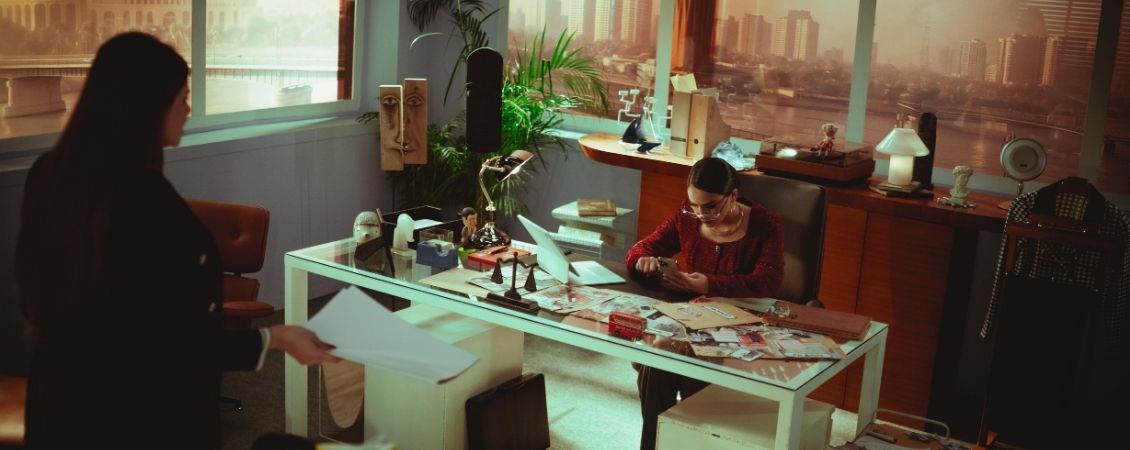
58% of UK office workers told us that messy desks and chaotic communal areas are hurting their productivity. Not mildly distracting. Not slightly annoying. Actively impacting their ability to focus.
In our recent survey of 2,000 UK office workers, we uncovered something many businesses quietly suspect but rarely address, workplace clutter is not just untidy, it is undermining morale, fuelling tension and shaping how employees judge leadership.
More than a third, 34%, said they actively avoid shared spaces such as kitchens and meeting rooms when they are left in disarray. Meanwhile, 42% admitted they have argued with a colleague about mess at work, and 1 in 3 say visible clutter increases their stress levels during the working day.
In a working world where culture, wellbeing and productivity dominate boardroom conversations, the state of the office kitchen might not seem like a priority. But the data suggests it should be.
The Hidden Toll of Daily Disorganisation
Clutter does not simply irritate, it disrupts. One in three workers, 33%, say visible mess increases their stress levels during the working day. Nearly three in ten, 29%, report wasting up to 15 minutes every day searching for misplaced documents or equipment. Over a year, that adds up to more than 60 hours per employee, the equivalent of nearly two working weeks lost to disorganisation.
For businesses already battling productivity concerns, that time leakage is significant. And the impact goes beyond output. 27% of employees say a disorganised office makes them question how well the company is managed overall, while 22% believe mess negatively affects client perceptions when visitors are onsite.
In other words, clutter is not just operational noise, it is reputational risk.
The emotional toll is equally telling. A further 19% confess they have secretly tidied up after someone else while feeling resentful about it. That quiet frustration builds. When employees feel they are picking up the slack, literally, it chips away at morale.
Hybrid Working Has Complicated the Clean Desk Dream
If pre-pandemic offices had their quirks, hybrid working has added a new layer of complexity. According to the survey, 48% of workers say hot desking has made it harder to maintain organisation and cleanliness. When desks are shared and ownership is blurred, accountability becomes murky.
A further 31% believe their workplace lacks clear guidelines around desk etiquette or shared space responsibilities. Without clear expectations, standards slip. What one employee considers acceptable, another sees as chaotic.
Perhaps most revealing is the perception gap. While 76% of employees say they personally keep their own desk tidy, only 41% believe their colleagues do the same. Everyone thinks they are the tidy one. Very few believe they are surrounded by others who are.
This disconnect suggests that workplace mess is less about individual habits and more about unspoken norms. Without visible standards and shared accountability, assumptions fill the gap.
Why Mess Matters More Than You Think
It is easy to frame clutter as a minor operational issue, something for facilities to quietly handle. But the data tells a different story. Mess touches productivity, wellbeing, culture and leadership perception all at once.
A tidy, well organised workspace signals care. It tells employees that their environment matters. It tells clients that attention to detail is embedded in the company’s DNA. Conversely, a chaotic environment can send subtle signals of disorganisation, even when teams are performing well behind the scenes.
For millennial and Gen Z workers in particular, who increasingly value intentional workplace design and culture, the physical environment is part of the employee experience. It is no longer just a desk, it is a statement.
Vicki Russell, Head of TX at instantprint, believes businesses underestimate the emotional weight of clutter. “It is easy to dismiss workplace mess as a minor irritation, but our research shows it can have a significant impact on morale, productivity and even company reputation. A tidy, well organised environment signals respect, for colleagues, for clients and for the work itself. Small changes in how we manage shared spaces can make a meaningful difference to how people feel at work.”
Her advice is simple but strategic:
1. Set visible standards
Use clear signage and branded reminders in kitchens and shared areas to reinforce expectations. When standards are visible, they are harder to ignore.
2. Build in micro resets
Encourage teams to spend five minutes at the end of each day resetting desks and communal areas. A collective reset creates shared ownership.
3. Make organisation effortless
Provide labelled storage, adequate bins and clearly designated areas for supplies. Good habits are easier to maintain when the environment supports them.
These are not grand cultural overhauls. They are low cost, practical shifts that reinforce shared responsibility.
The Real Cost of ‘It’s Not My Job’
One of the most striking insights from the survey is how quickly mess becomes emotional. When 42% of employees have argued about clutter, it is no longer a facilities issue, it is a relationship issue.
Left unchecked, small frustrations compound. The colleague who never washes their mug becomes the colleague who “does not pull their weight”. The messy meeting room becomes symbolic of wider communication breakdowns. Over time, minor irritations can feed larger narratives about fairness and accountability.
In hybrid environments, where in-person interactions are already reduced, these small friction points can loom larger. The office is meant to foster collaboration and connection. If it instead breeds quiet resentment, the cultural cost is high.
From Clutter to Culture: What Workplaces Can Do Next
The encouraging news is that this is a solvable problem. Unlike structural economic challenges or complex technology transitions, workplace organisation is within immediate control.
Start by auditing shared spaces. Are expectations clearly communicated? Are storage solutions intuitive? Are there enough resources, from bins to filing systems, to make tidiness achievable?
Then, involve teams in setting standards. When employees help define what “organised” looks like, they are more likely to uphold it. Consider creating visual cues, such as branded desk etiquette posters or kitchen reminder signs, that align with company values rather than feeling punitive.
Finally, treat organisation as part of culture strategy, not an afterthought. If nearly six in ten employees say mess affects their productivity, and a third say it raises stress levels, this is a wellbeing issue as much as an operational one.
As businesses look ahead, in 2026 competing for talent and striving for stronger performance, the details will matter more than ever. The physical workspace remains a powerful, visible expression of company standards.
The message from UK office workers is clear. Clutter is not harmless. It is costly. And in a working world where every percentage point of productivity counts, keeping the office tidy might just be one of the simplest competitive advantages a business can claim.
.jpg)